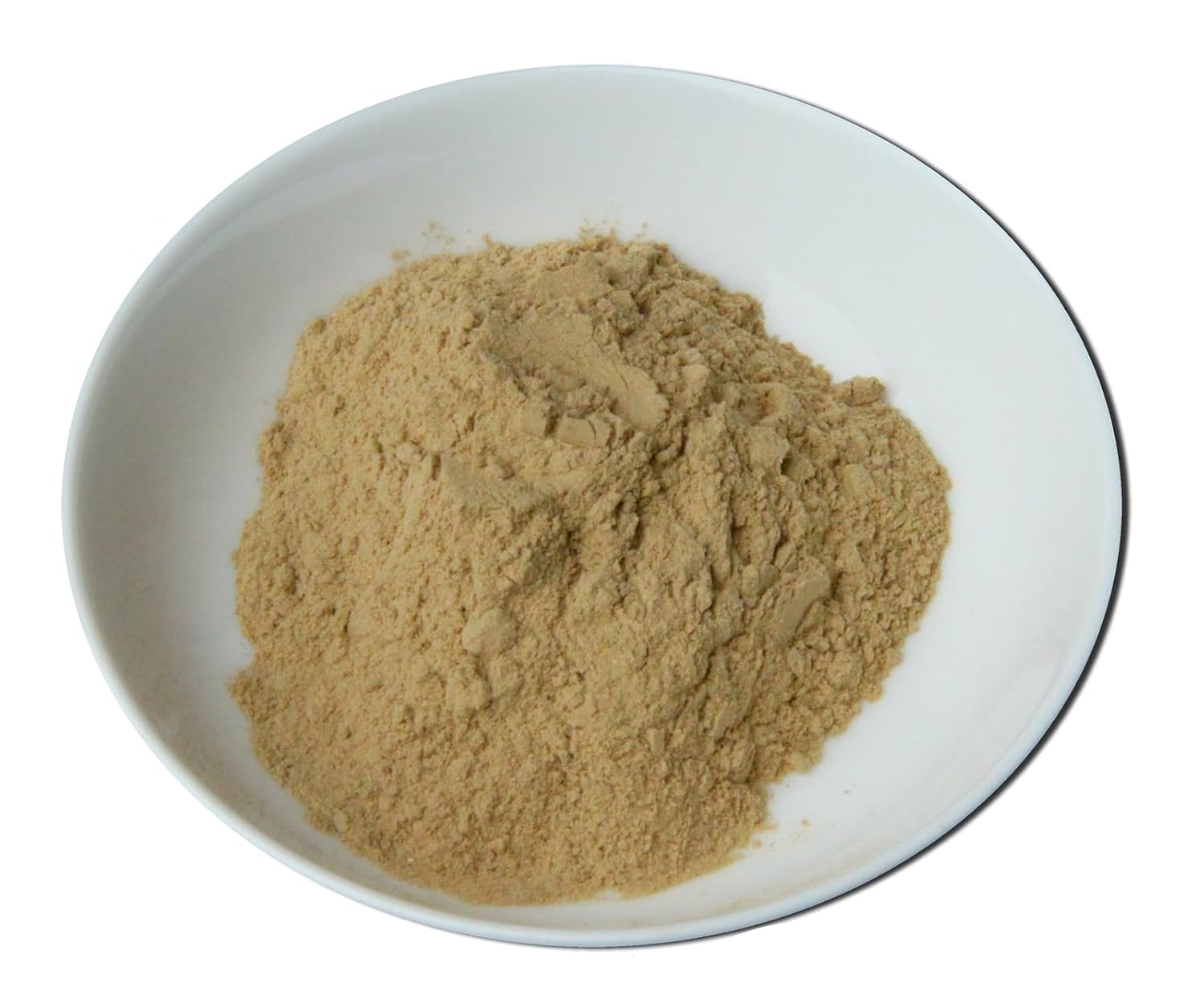
If you’ve ever grabbed a clay mask at the drugstore and walked away with tight, flaky skin — even though the label promised a “purifying glow” — you may have been using the wrong clay for your skin type. Clay masks aren’t a single category. They’re a family of minerals with meaningfully different chemistries, and using a high-swelling volcanic clay on dry or sensitive skin is roughly equivalent to using a dish sponge to wash a cashmere sweater. It gets the job done, technically, but at a cost. This guide is specifically about rhassoul clay (also spelled ghassoul), a rare mineral clay harvested from the Atlas Mountains of Morocco. It’s gentler, more conditioning, and structurally different from the bentonite and kaolin clays that dominate the market. By the end of this article, you’ll understand why the distinction matters, where rhassoul fits in a considered skincare routine, and which products across price tiers are worth your attention.
The Actual Chemistry: Why Rhassoul Behaves Differently on Skin
Let’s start with what these clays actually are, because the category label “clay” papers over a wide range of mineral behavior.
Bentonite is a smectite clay composed primarily of montmorillonite, a mineral formed from volcanic ash. Its defining characteristic is an exceptionally high cation exchange capacity (CEC) — a measure of how aggressively a mineral swaps ions with the substances it contacts, including sebum, impurities, and moisture. Per Paula’s Choice’s ingredient dictionary, bentonite is a powerful absorbent, which is exactly why it’s effective for oily, congested skin and why it can feel punishing on skin that’s already lean on lipids.
Kaolin is a phyllosilicate clay (a layered silicate mineral) that sits at the gentler end of the spectrum — lower CEC, finer particle size, less aggressive absorption. Paula’s Choice’s ingredient analysis notes kaolin as appropriate for normal-to-dry skin, though it still primarily absorbs rather than conditions.
Rhassoul (from the Arabic rassala, meaning “to wash”) is mineralogically classified as a stevensite or hectorite-group clay, depending on the specific deposit — a distinction the Mineralogical Society of America documents in structural analyses of Moroccan smectite deposits. What sets it apart is a uniquely high ratio of silica and magnesium to alumina, paired with a lower CEC than bentonite. Research published via NCBI’s database on the adsorption properties of ghassoul clay demonstrates that rhassoul adsorbs (binds to surface substances) without the aggressive ionic pull that strips the skin’s natural moisture barrier. It cleans through a combination of surface adsorption and a slight emulsifying action when activated with water — functioning more like a gentle surfactant-free cleanser than a heavy-duty pore vacuum.
The practical upshot: rhassoul removes excess sebum and impurities while leaving behind enough of the skin’s natural lipid film that the post-mask tightness associated with bentonite treatments is significantly reduced. Allure’s clay mask guide characterizes this distinction as the difference between “cleaning” and “stripping,” and it’s an accurate frame.
By the numbers:
| Clay | Primary Mineral | CEC (meq/100g, approx.) | Best For |
|---|---|---|---|
| Bentonite | Montmorillonite | 80–150 | Oily, acneic skin |
| Kaolin | Kaolinite | 3–15 | Normal, mildly oily |
| Rhassoul | Stevensite/Hectorite | 40–70 | Dry, sensitive, combination |
CEC ranges are approximate averages from published mineralogy literature; individual products vary by source deposit and processing.
Where Rhassoul Fits in a Considered Routine (And What It Conflicts With)
Understanding the clay is one thing. Knowing how to deploy it without undermining the rest of your routine is what separates a competent product choice from a smart protocol decision.
Retinoid users: Rhassoul’s gentler profile makes it more compatible with retinoid-adjacent routines than bentonite, but the pairing still requires sequencing discipline. If you’re using a prescription tretinoin or a high-percentage retinol (0.5%+), avoid masking on the same night. Retinoids already accelerate barrier turnover; adding any clay treatment increases transepidermal water loss on the same application day. Use rhassoul on off-nights, or in a morning routine before your SPF if your protocol allows.
Exfoliating acid users (AHAs/BHAs): Byrdie’s coverage of clay masks consistently flags this pairing as an over-exfoliation risk. Rhassoul’s mild mechanical exfoliation from fine mineral particles, combined with an AHA toner applied the same evening, can erode the barrier for sensitive skin types. The rule of thumb: one active per session.
Vitamin C: Lower conflict here than with either of the above. Rhassoul is pH-neutral to mildly alkaline when wet — closer to skin’s natural range than bentonite, which can be more alkaline. That said, if you’re using a highly acidic L-ascorbic acid serum (pH 2.5–3.5), apply it before masking if you’re doing a same-session routine, or separate them entirely. The clay will adsorb some of your vitamin C investment before it reaches the skin if applied on top.
Hair and scalp use: This is where rhassoul has historically outperformed every competing clay, and it’s the context in which Moroccan hammam culture has used it for centuries. The same low-CEC, high-magnesium mineral profile that leaves facial skin comfortable leaves hair fiber conditioned rather than stripped. Reviewers across aggregated haircare communities note that rhassoul is particularly effective as a “no-poo” (no-shampoo) clarifying wash for curly and coily hair types — removing product buildup without disturbing the natural curl pattern. It functions as both cleanser and light conditioner in a single step.
Body use: Rhassoul performs exceptionally well in body masking and bath applications, where its high silica content contributes to a slight skin-softening effect. Spa-protocol users in professional esthetician forums note that body mud treatments using rhassoul base have lower post-treatment skin reactivity than bentonite-based body wraps, making it the preferred choice for clients with eczema-prone or rosacea-adjacent skin.
Shopping Rhassoul: Tradeoffs Across Price Tiers
Here’s where the practitioner-level decision-making comes in. Rhassoul is available in three meaningful purchasing formats — raw powder, blended retail masks, and professional-grade treatment products — and the tradeoffs between them are real.
Raw powder ($10–$30, 1–2 lb bags): The highest-value format by volume. Owners consistently report that DIY blending gives them full control over hydration level (water-only for cleansing; honey, aloe, or rose water for added conditioning). The cost-per-use math is unambiguous: a 1 lb bag at $20 yields approximately 30–40 full facial applications at roughly $0.50–$0.65 per use. The tradeoff is formulation work — raw powder requires activation and doesn’t include the delivery vehicles (humectants, film-formers) that stabilize a retail product. For a home user comfortable with basic mixing, this is the best entry point. For retail gifting or consistent travel use, it’s impractical.
Blended retail masks ($25–$85): The middle tier is where rhassoul most often appears as a primary or co-starring ingredient rather than the base. Brands in this range — including Herbivore’s formulations and several OSEA body products — use rhassoul alongside botanical extracts and humectants that mitigate any residual tightening. Byrdie’s roundups consistently place these products as the practical choice for busy routines where you want the benefit without the prep ritual. Cost-per-use in this tier typically runs $2–$5 per facial application for a 2–3 oz jar used weekly.
Prestige and professional-grade ($90–$350+): At the Sisley Paris and La Mer tier, rhassoul typically appears in complex multi-clay formulas where it contributes conditioning texture while kaolin or other clays handle more targeted adsorption. The value proposition at this price point is rarely about the rhassoul alone — it’s about the full delivery system: the encapsulated actives, the dermal-grade emollients, the clinical backing. Per Vogue’s coverage of high-luxury skincare, the justification for these price points lives in the supporting cast, not the hero clay. That’s a legitimate value proposition for a buyer who wants a single mask to deliver multiple outcomes; it’s a poor justification for someone who only needs the rhassoul’s mineral action and is happy to blend it themselves.
For professional treatment rooms: Eminence Organics and Bioelements both carry rhassoul-adjacent product lines. Operators and spa owners report that the per-treatment economics favor purchasing professional-size rhassoul powder in bulk and blending in-house for body treatments, while reserving retail-branded products for facial protocols where client-facing presentation and formulation complexity justify the price. A 5 lb professional bag at approximately $60–$80 can yield 80–100 body treatment applications at under $1 per use — versus $8–$15 per use for a pre-blended professional body mud.
The Decision Framework: If X, Then Y
This is the practitioner-level summary. If your routine or client profile maps to one of these conditions, here’s the call:
If your skin is oily or actively acne-prone → rhassoul is gentler than you need as a primary clay. Bentonite or a kaolin/bentonite blend will deliver the adsorption you’re after. Rhassoul is a good finishing clay here — mix it into a bentonite formula at a 1:1 ratio to reduce post-mask tightness without sacrificing performance.
If your skin is dry, sensitive, or compromised by barrier disruption → rhassoul is your primary clay. Avoid bentonite entirely. Look for formulations that pair rhassoul with humectants (hyaluronic acid, glycerin, aloe vera) rather than astringents. Use once weekly maximum.
If you’re managing a curly or coily hair type and looking to reduce shampoo frequency → rhassoul powder used as a scalp scrub and hair rinse is well-documented in haircare literature. Harper’s Bazaar’s natural hair guides have covered this application extensively. Mix to a loose slip, apply to wet hair, massage through from root to mid-shaft, and rinse thoroughly.
If you’re running a treatment room and evaluating product economics → the raw powder bulk model for body treatments is hard to beat on cost-per-use. The incremental spend on a pre-blended professional product makes sense for facial protocols where the full formula complexity is part of the service value proposition.
If you’re at the prestige buying tier and want one mask to do everything → a multi-clay luxury formulation that includes rhassoul as a conditioning agent alongside kaolin’s adsorption is a coherent purchase. You’re paying for the full delivery system, not just the clay, and that’s a legitimate trade. Just verify the ingredient list: rhassoul should appear in the first five to eight ingredients to have meaningful presence, not as a cosmetic label claim buried near the fragrance line.
The bottom line: rhassoul is not a prestige novelty or a marketing reframe of bentonite. It is a mineralogically distinct clay with a gentler mechanism, a conditioning secondary profile, and a legitimate place in both dry-skin facial routines and hair care protocols that bentonite simply cannot replicate. Get the clay right, and the rest of the formula works with your skin instead of against it.