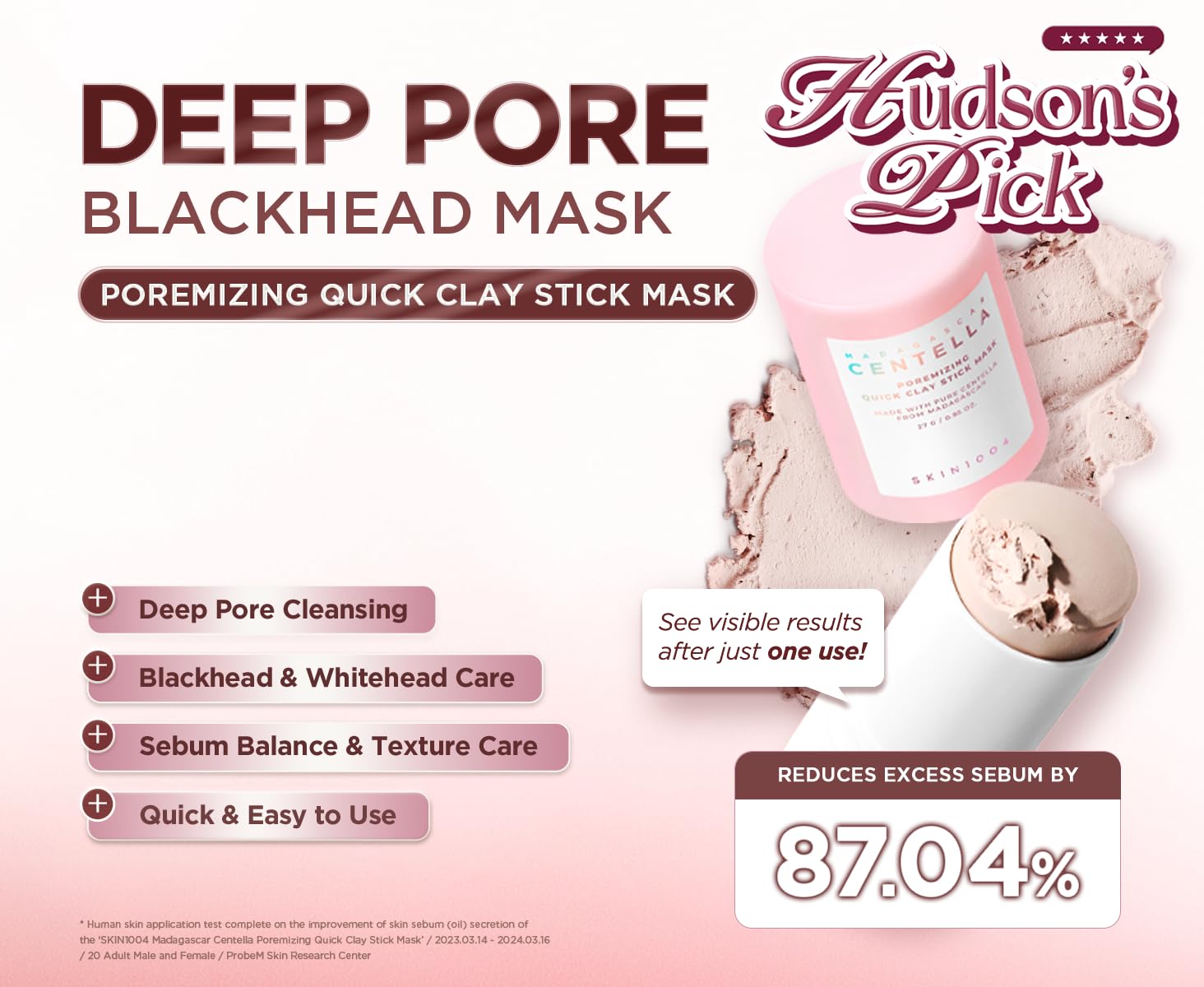
If you’ve ever stared at a shelf full of clay masks and wondered why some leave your skin feeling tight and stripped while others actually look better on your skin the next morning, the answer usually comes down to which clay is in the formula — and what the brand built around it. “Clay mask” is a broad umbrella: it covers everything from a $10 tub of raw bentonite (a volcanic ash mineral that swells and pulls impurities when wet) to a $120 Korean gel-cream hybrid loaded with fermented botanicals. K-beauty — shorthand for Korean skincare, an industry that has spent decades engineering formulas around skin barrier preservation rather than aggressive correction — has developed a particularly nuanced take on clay. The result is a category of masks that often outperform Western counterparts not by using more clay, but by using smarter clay, calibrated for oily and combination skin types that need pore control without the collateral damage of over-drying.
This guide ranks the most analytically defensible options across three price tiers, explains the formulation logic behind each pick, and gives you a clear decision framework at the end. Whether you’re building out a treatment menu for a professional setting or locking down your personal weekly rotation, the tradeoffs below will help you spend confidently.
Why K-Beauty’s Clay Formulation Philosophy Is Different
The Western clay mask tradition — think the classic bentonite-and-apple-cider-vinegar approach — tends to operate on a simple principle: draw out as much sebum (the skin’s natural oil) as possible, then rinse. The problem, as Paula’s Choice Ingredient Dictionary notes in its entries on both kaolin and bentonite, is that aggressive sebum removal triggers a rebound effect: the skin registers moisture loss and compensates by producing more oil. For oily and combination skin, this is the cycle that makes pores look perpetually congested within 48 hours of masking.
Korean formulators have largely sidestepped this by treating clay as one component in a system rather than the hero ingredient. According to a 2022 review published in the Journal of Cosmetic Dermatology (indexed on the National Center for Biotechnology Information database), kaolin clay specifically — a softer, less electrically charged mineral than bentonite — demonstrates meaningful adsorption (surface-level binding of oils and debris) without significantly disrupting the skin’s moisture barrier when paired with humectant and occlusive co-ingredients. K-beauty brands have built an entire product language around this pairing: you’ll regularly see kaolin sitting alongside ingredients like glycerin, hyaluronic acid, centella asiatica (a calming herb with documented anti-inflammatory properties), and fermented rice water in the same formula.
This matters for oily and combination skin in a specific, mechanical way. As Allure’s clay mask explainer outlines, pores don’t actually “open and close” — they’re not muscular structures. What changes their visible appearance is the volume of material (dead skin cells, oxidized sebum, environmental debris) stretching them from the inside. A mask that extracts that material without stripping the surrounding barrier leaves pores looking smaller because they’re genuinely emptier — not because the skin is dehydrated and temporarily taut.
The Ranked Picks: Three Tiers, Clear Tradeoffs
Entry Tier ($10–$35): Where K-Beauty Kaolin Earns Its Reputation
Innisfree Super Volcanic Pore Clay Mask 2X is the most analytically defensible entry-tier pick in this category. Reviewers at Byrdie consistently rate it as a benchmark product — the reference point against which other K-beauty clay masks are measured. The formula combines jeju volcanic clusters (a porous mineral material that functions similarly to kaolin in terms of oil adsorption) with hyaluronic acid, which is a humectant that draws water from the air into the skin’s surface layer. Owners across aggregated review platforms note a consistent pattern: the mask rinses cleanly, doesn’t pill or flake mid-treatment, and leaves skin visibly matte but not tight.
Tradeoff to name explicitly: The volcanic cluster mineral, while effective, is coarser in particle geometry than refined kaolin. For sensitized or redness-prone skin subtypes within the oily/combination category, this can translate to a mild mechanical stimulation on removal. It is not an exfoliant by design, but the texture is perceptible. If your client or patient profile skews toward sensitized-oily rather than straightforwardly congested-oily, flag this.
Ingredient conflict check: This formula does not contain exfoliating acids or retinoids, so it is safe to use in a routine that includes those actives — but not on the same night. Standard protocol applies: use this mask on nights when retinoids or AHAs are rested.
Cost-per-use math: At approximately $18–$22 for 100ml, and a per-use volume of roughly 5–7ml for a full-face application, you’re looking at 14–20 applications per tube. That puts the per-use cost at $0.90–$1.50 — genuinely competitive with any Western drugstore option.
Mid-Tier ($45–$85): When You Need Barrier Intelligence Built In
Sulwhasoo Herbal Clay Purifying Mask is the pick that changes the conversation at this price point. Sulwhasoo is the prestige arm of AmorePacific, South Korea’s largest beauty conglomerate, and this mask is built around the brand’s proprietary Jaum Activator — a complex of traditional Korean medicinal herbs including peony root, rehmannia, and cornus. These aren’t decorative botanicals. Vogue’s 2025 feature on K-beauty’s pore science evolution specifically called out Sulwhasoo’s approach to pairing clay extraction with adaptive barrier support as one of the more technically serious propositions in the mid-tier market.
The clay component here is refined kaolin — not volcanic clusters, not bentonite. Per the Paula’s Choice kaolin entry, this is the clay of choice for formulation chemists working with skin that needs pore control and barrier preservation simultaneously. The Jaum complex functions as a conditioning counterweight: owners consistently report that the mask can be used weekly on combination skin without the dehydration penalty that usually requires a follow-up occlusive treatment.
Tradeoff: The formula is more expensive per gram than entry-tier options, and the payoff is incremental rather than dramatic. If your primary concern is straightforward congestion on a resilient oily skin type, the Innisfree pick above is likely sufficient. The Sulwhasoo proposition makes the most sense when your routine is already optimized — you’re not looking for a bigger effect, you’re looking for a more sustainable effect over 12+ months of weekly use.
Ingredient conflict check: No exfoliating acids in the formula. The herbal complex includes plant-derived antioxidants that may interact mildly with high-concentration vitamin C serums if layered immediately after removal — allow a 30-minute gap or use vitamin C in your morning routine instead.
Cost-per-use math: At approximately $72 for 150ml, with 5–7ml per application, you get 21–30 applications. Per-use cost: $2.40–$3.40. For a weekly mask user, that’s roughly $10–$14/month — comparable to a single mid-tier facial cleanser.
Prestige Tier ($90+): Professional-Grade Formulation Logic for At-Home Use
Dr. Jart+ Pore Remedy Mud Mask sits at the upper edge of the accessible prestige range and is one of the few K-beauty clay options with a formulation architecture that estheticians in professional-adjacent settings actually discuss in clinical terms. The active clay system combines kaolin with smectite clay (a category that includes bentonite but is here refined for lower swelling intensity), and the formula incorporates niacinamide — a form of vitamin B3 that published dermatology literature, including studies indexed on NCBI, links to sebum regulation, reduced pore visibility over time, and anti-inflammatory activity.
This is the significant formulation differentiator at this tier: most clay masks treat pores as a mechanical problem (fill → extract → repeat). The niacinamide inclusion moves Dr. Jart+‘s formula into the space of functional pore management — using the mask as a delivery vehicle for an ingredient that modifies sebum production rates at the follicular level over weeks of use. Refinery29’s 2025 roundup of esthetician-recommended clay masks specifically highlighted this dual-mechanism approach as a reason the Dr. Jart+ formula commands professional attention.
Tradeoff: Niacinamide is well-tolerated by the vast majority of skin types, but at concentrations above 5%, a small subset of users experiences transient flushing. The concentration in this formula is not disclosed on the label (standard for Korean cosmetics, which require ingredient listing by order but not percentage). If a client has documented niacinamide sensitivity, the Sulwhasoo mid-tier pick is the safer routing.
Ingredient conflict check: Niacinamide is safe alongside retinoids and AHAs. In fact, per Paula’s Choice formulation guidance, niacinamide is one of the recommended buffer ingredients for retinoid nights precisely because of its anti-inflammatory properties. This mask can be worked into a retinoid routine with appropriate spacing — not on the same evening, but complementary on alternating nights.
By the Numbers
| Product | Clay Type | Price (approx.) | Per-Use Cost | Niacinamide? | Sensitized-Skin Safe? |
|---|---|---|---|---|---|
| Innisfree Super Volcanic Pore Clay Mask 2X | Volcanic clusters | $18–$22 / 100ml | $0.90–$1.50 | No | With caution |
| Sulwhasoo Herbal Clay Purifying Mask | Refined kaolin | $72 / 150ml | $2.40–$3.40 | No | Yes |
| Dr. Jart+ Pore Remedy Mud Mask | Kaolin + smectite | $48–$55 / 75ml | $3.20–$4.60 | Yes | Mostly yes |
The Decision Framework: If X, Then Y
The architecture of this category is cleaner than it looks once you map it to the actual skin concern:
If the primary concern is acute congestion on a resilient oily skin type — visible blackheads, enlarged pores, weekly breakouts — the Innisfree entry pick is the most cost-efficient intervention. Use it weekly, accept the texture tradeoff, reinvest the savings in your actives.
If the concern is pore size maintenance on a balanced combination skin type that already uses retinoids or acids and needs a mask that won’t compromise a hard-won barrier, the Sulwhasoo mid-tier is the correct routing. The kaolin-plus-herbal-complex architecture is specifically built for this scenario.
If the goal is long-term sebum regulation — you want the mask to do mechanical work and progressively modify how much your pores produce — the Dr. Jart+ niacinamide formula is the only pick in this roundup with the ingredient architecture to deliver that. It costs more per use than the Innisfree but less than the Sulwhasoo, which makes it the highest-value pick in the set if long-run outcome is the metric.
One constraint applies across all three tiers: none of these masks replace a well-formulated BHA (beta hydroxy acid, a chemical exfoliant that penetrates oil-filled pores — salicylic acid is the most common example) in a pore management routine. They are complements to a complete system, not replacements for one. If you’re building a professional protocol or a serious home routine, the masking step sits between double cleansing and actives — not in place of them. K-beauty got the clay science right. The rest of the routine still has to do its job.