If you have ever stood in front of three jars of clay powder — kaolin, bentonite, and rhassoul — and genuinely wondered whether it matters which one you use, you are not behind. These are real, distinct minerals with measurably different behaviors on skin, and most product labels do not explain why the differences are consequential. Clay, in the skincare sense, is a naturally occurring mineral compound that draws impurities and excess oil out of pores when it dries against the skin — a process called adsorption (the “d” is intentional: adsorption means particles stick to the surface of the clay, rather than being absorbed into it). Kaolin is a soft, fine-particle white clay with low drawing power. Bentonite is a volcanic ash clay with strong ionic pull and significant drying force. Rhassoul is a Moroccan lava clay with a different mineral profile — higher silica and magnesium — that conditions as it cleanses. This guide gives you the science, the decision rules, and the specific ratios to build a custom mask formula for your skin type, from dry and sensitive through oily and congested.
Why the Clay Type Matters More Than the Brand
The mistake most intermediate formulators make is treating clay as an interchangeable commodity — assuming a premium bentonite and a budget kaolin are just different grades of the same thing. They are not. The three powders behave differently at the molecular level, and blending them in the wrong ratio for your skin type can trigger the exact problem you are trying to solve.
Kaolin: The Mild Foundation Clay
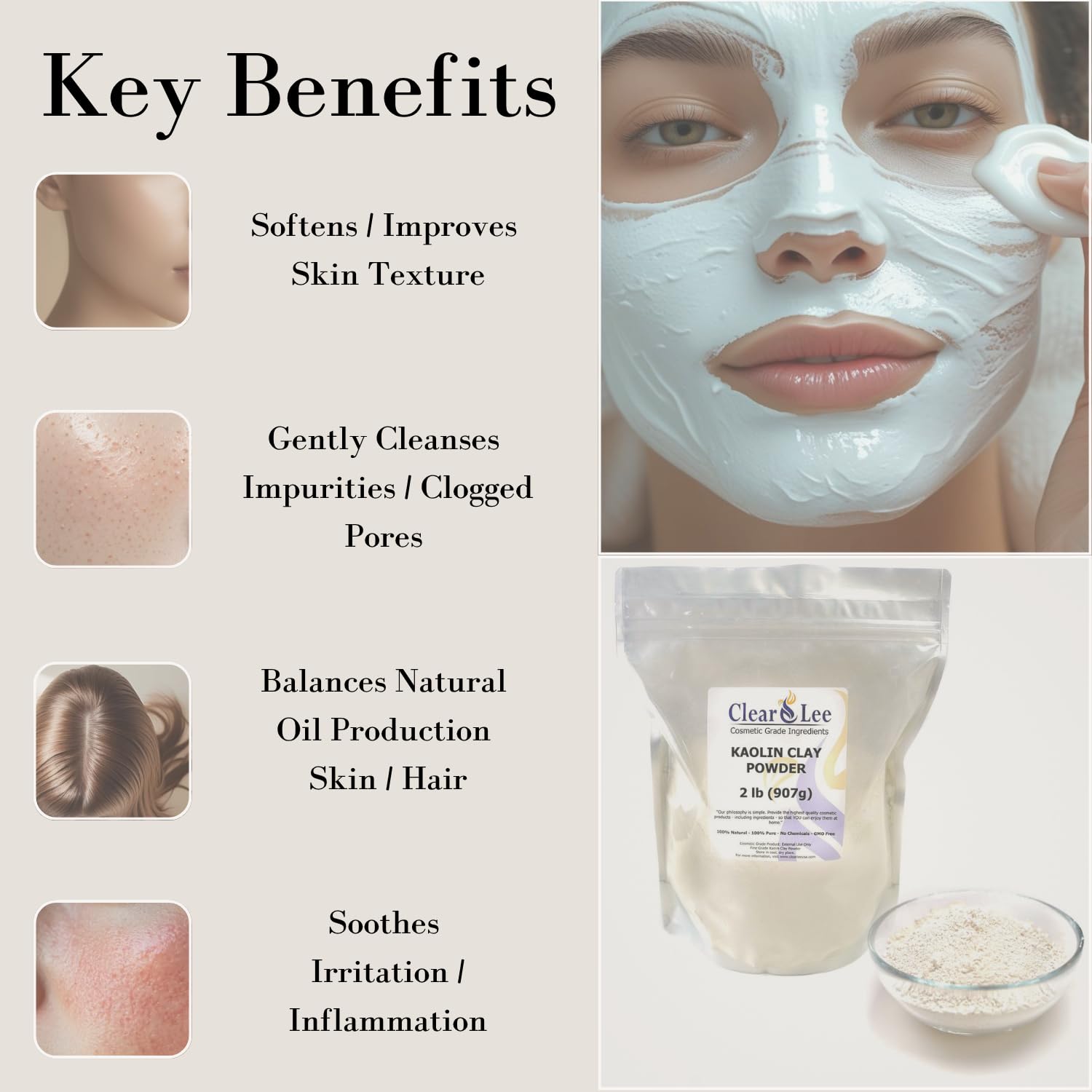
Kaolin is the mildest of the three. Its particles are fine, flat, and layered, and its ion-exchange capacity — the measure of how aggressively it pulls charged particles (like sebum and surface debris) from the skin — is low. The Paula’s Choice Ingredient Dictionary (paulaschoice.com) describes kaolin as non-comedogenic and notes it is frequently used in formulas designed for sensitive or dry skin because it provides a smoothing, mattifying effect without stripping the skin barrier. Key point: kaolin does not “detox” your skin in any clinically meaningful sense. It absorbs surface oil. That is useful; it is just not the same thing as deep pore clearing.
 product image](/images/external/eff2450a1b0b.jpg)
Pure
$8.99
In stock on Amazon
Check price on AmazonBentonite: The High-Draw Active Clay
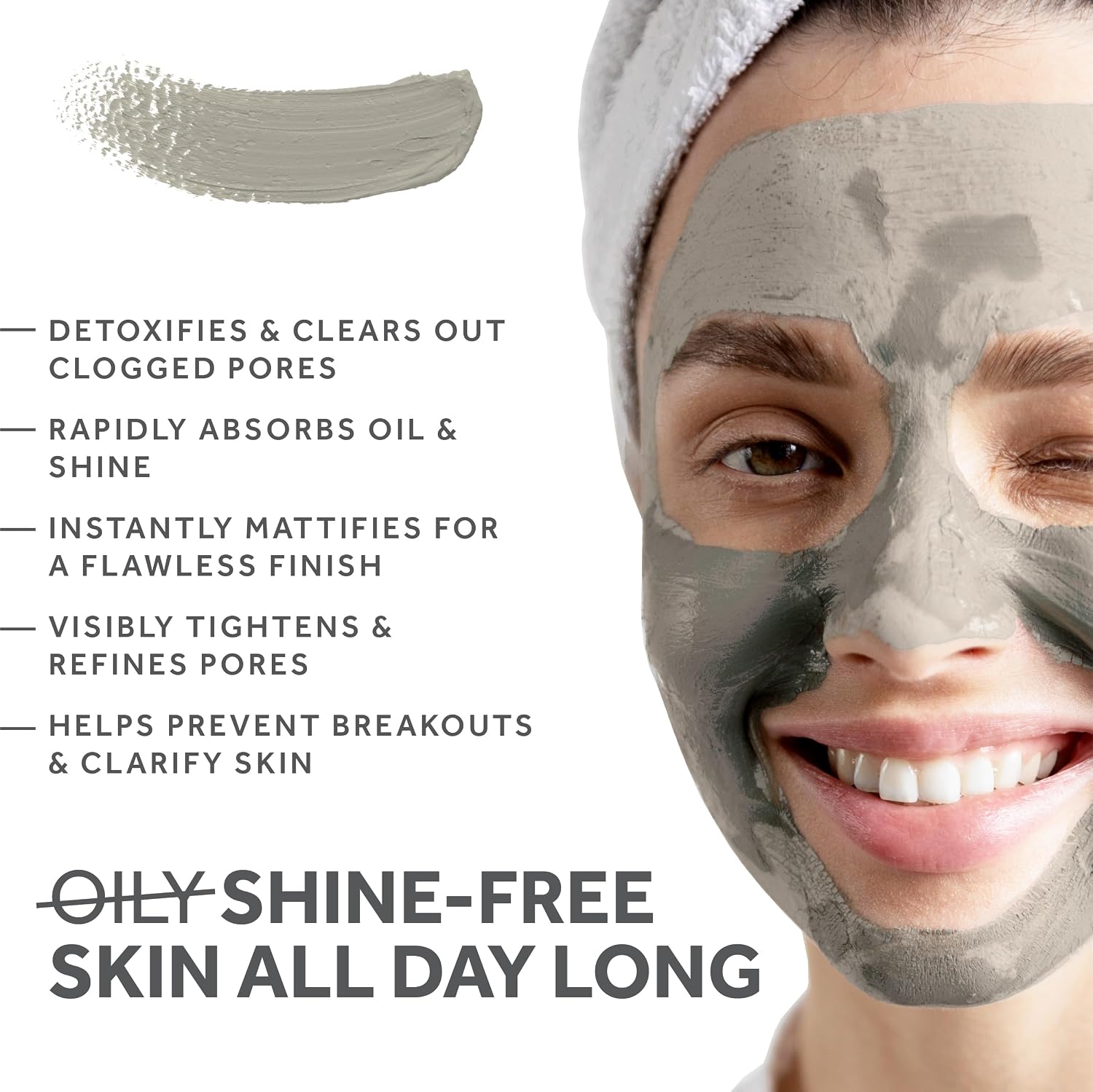
Bentonite is in a different category. As a swelling clay — it expands when wet, then contracts as it dries — it generates real mechanical force against the pore lining. Its ion-exchange capacity is substantially higher than kaolin’s. Research indexed at the National Center for Biotechnology Information (PubMed/NCBI) documents bentonite’s capacity to bind to sebum, bacterial cell walls, and some heavy metal ions in topical applications. For acne-prone or oily skin, that is the mechanism you want. The tradeoff: used at full concentration on dry or sensitive skin, bentonite can disrupt the skin’s natural moisture factor and temporarily compromise the barrier, which in practice means flaking, tightness, and rebound oiliness. The Cosmetic Ingredient Review Expert Panel’s 2021 “Safety Assessment of Clay-Based Ingredients” notes that repeated use of high ion-exchange clays on barrier-impaired skin can exacerbate transepidermal water loss — a finding that directly informs the ratios in this guide.
Rhassoul
$19.95
In stock on Amazon
Check price on AmazonRhassoul: The Conditioning Clay
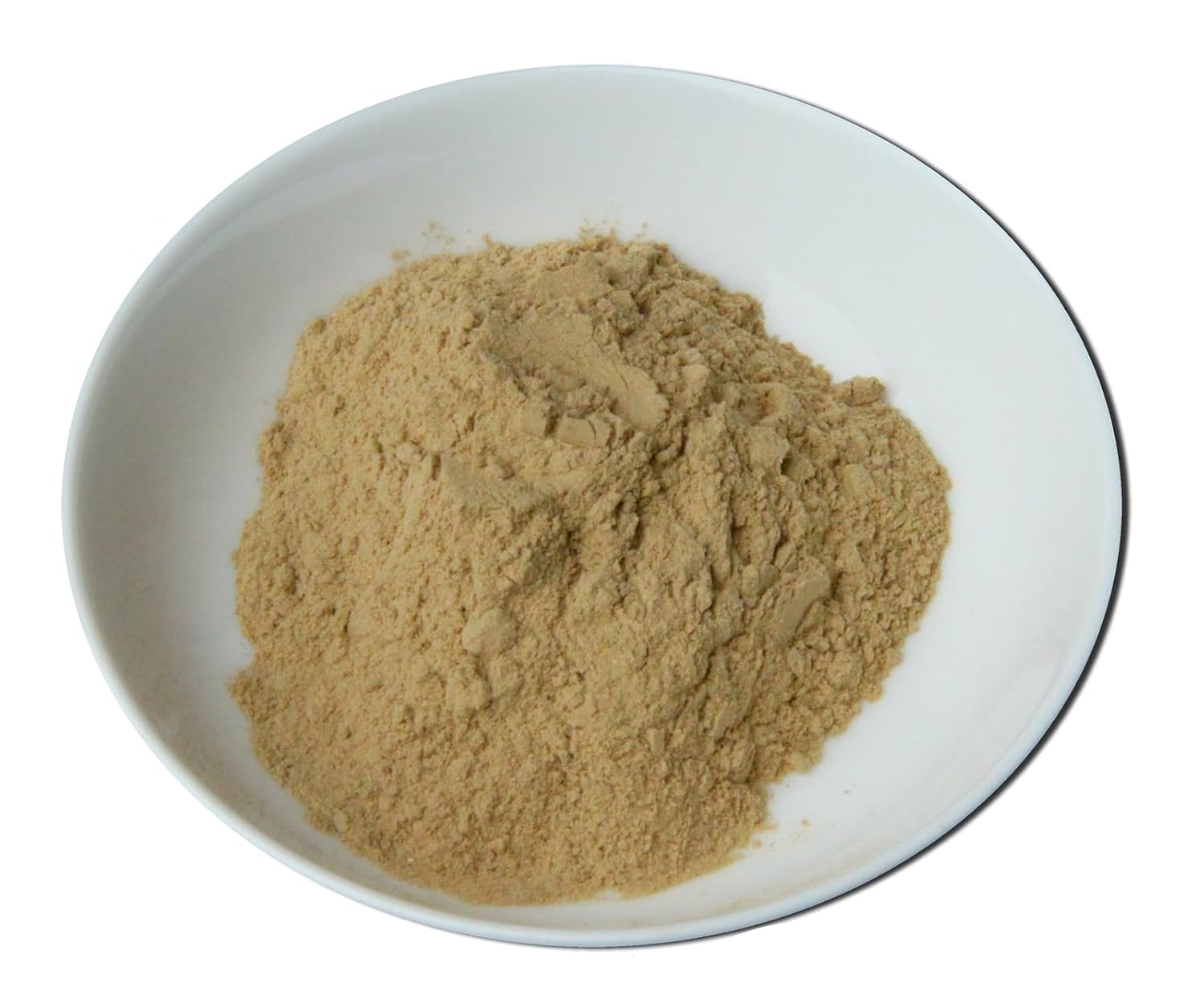
Rhassoul sits between the two, but it is not simply a moderate version of bentonite. Its silica and magnesium content give it a distinct conditioning profile. Byrdie’s editorial coverage of clay mask ingredients notes that rhassoul is the only clay in this trio that leaves skin feeling softer rather than tighter after use — a distinction that matters when you are calibrating a formula for combination or mature skin. It is also the most expensive of the three in powder form, which affects blend economics when you are scaling a protocol. Allure’s editorial overview of clay masks reinforces this positioning, identifying rhassoul as the preferred choice for anyone who wants oil control without the aggressive stripping associated with bentonite-dominant formulas.
FOSSIL
$37.99
In stock on Amazon
Check price on AmazonThe Mix Ratio Framework: Skin Type Decision Tree
This is where practitioners earn their ratios. The table below gives you the starting formulas; the narrative that follows explains the logic so you can adjust intelligently when skin behaves unexpectedly.
Starting Mix Ratios by Skin Type
| Skin Type | Kaolin | Bentonite | Rhassoul | Notes |
|---|---|---|---|---|
| Dry / sensitive | 80% | 0% | 20% | No bentonite; rhassoul adds slip |
| Normal / balanced | 50% | 20% | 30% | Low bentonite ceiling |
| Combination | 40% | 25% | 35% | Rhassoul dominant |
| Oily / congested | 30% | 50% | 20% | Bentonite leads; rhassoul buffers |
| Acne-prone (active breakouts) | 20% | 70% | 10% | Limit to 1x/week maximum |
These ratios assume a dry-mix base hydrated with water, aloe vera gel, or rose hydrosol at time of use. Hydration medium matters: water activates bentonite’s ion exchange most aggressively; aloe gel (which contains polysaccharides) moderates the pull slightly, making it a better choice when using higher-bentonite blends on skin that is reactive but oily.
Dry and sensitive skin: The complete exclusion of bentonite here is intentional. Allure’s editorial overview of clay masks explicitly flags bentonite as unsuitable for dry or compromised skin types. At 80/20 kaolin-to-rhassoul, you get light oil absorption and the smoothing of kaolin, plus rhassoul’s silica-driven surface conditioning. Use frequency: no more than once per week.
Combination skin: Rhassoul is the dominant clay here, not bentonite. This is a counter-intuitive move for practitioners trained to reach for bentonite whenever they see a T-zone. The logic: combination skin typically has a dry or sensitized cheek zone and an oily nose and chin. A rhassoul-dominant blend treats the full face without over-stripping the dry areas, while the 25% bentonite component provides enough drawing force for congested pores. If you want to spot-treat the T-zone with a higher-bentonite formula, apply a second layer of a 60/40 bentonite/kaolin blend only to the nose and chin over the base mask, then remove both simultaneously.
Oily and acne-prone: The separation of “oily/congested” from “acne-prone with active breakouts” matters clinically. Active inflamed breakouts — papules, pustules — should not be treated with high-bentonite formulas at high frequency. The mechanical force can irritate already-compromised follicular walls. One session per week maximum. Between sessions, a kaolin-dominant blend is appropriate for daily or every-other-day use as a gentle mattifying cleanser, not a mask.
Ingredient Conflicts You Cannot Ignore
This section is non-negotiable if you are working with clients or building a home protocol. Mixing the wrong actives with high-bentonite formulas is one of the most consistent sources of barrier damage in DIY skincare.
Retinoids: Do not use any clay mask — especially bentonite — on skin that has applied a retinoid within 48 hours. Retinoids (including over-the-counter retinol and prescription tretinoin) thin the stratum corneum over the short term and increase transepidermal water loss. Adding bentonite’s adsorptive pull to already-sensitized skin compounds barrier disruption. The Paula’s Choice Ingredient Dictionary entry on bentonite (paulaschoice.com) advises against combining strong clay treatments with active retinoid use in the same routine window.
Exfoliating acids (AHAs/BHAs): Glycolic, lactic, and salicylic acid — common in toners and serums — have already altered the skin’s pH and begun loosening dead skin cell cohesion when applied. Layering a clay mask on top, or using one the same day, doubles the exfoliation load. Byrdie’s editorial guidance on combination skincare routines consistently flags this as a source of over-exfoliation symptoms: redness, sensitivity spikes, and paradoxical acne flares.
Vitamin C (L-ascorbic acid, specifically): High-concentration vitamin C serums — above 15% — temporarily acidify the skin surface to improve penetration. Bentonite’s ion-exchange mechanism is pH-sensitive; it is more reactive in acidic environments. Using bentonite on a skin surface primed by L-ascorbic acid can increase its drawing force unpredictably. The safe protocol: always apply clay masks to clean, bare skin, not on top of serums. Your clay session and your vitamin C session belong on separate nights or at minimum with a full 24-hour gap.
Buying Powders: What to Look For and What to Skip
For dry clay powders specifically, sourcing quality matters because adulterants and heavy metal contamination are documented concerns. The Cosmetic Ingredient Review Expert Panel’s 2021 “Safety Assessment of Clay-Based Ingredients” notes that raw bentonite can carry trace amounts of lead and arsenic in some geological deposits — a real concern for formulas applied to facial skin. When evaluating a powder supplier, look for:
- Third-party heavy metal testing certificates: Reputable cosmetic-grade suppliers will provide these on request. “Cosmetic grade” printed on a label alone is not sufficient verification.
- Particle size specification: For facial use, bentonite should be 200 mesh or finer. Coarser grades are appropriate for body wraps and spa treatment room use but can cause microtears on delicate facial tissue.
- Country of origin and geological source for rhassoul: Authentic ghassoul/rhassoul is mined in Morocco’s Middle Atlas region. Products sold as “Moroccan clay” with no geological documentation may be blended with cheaper kaolin and will not deliver the silica-magnesium conditioning profile that makes rhassoul worth its price premium.
For estheticians sourcing professional-volume powders, pre-blended clay bases with documented sourcing simplify the quality control burden in a treatment room context. The tradeoff is significantly higher cost per gram versus raw powder — but in a professional setting, the formulation consistency and documented ingredient sourcing are worth the premium over bulk unverified powder.
The Decision Rule
If you are building a protocol — for yourself, a client, or a product formulation — use this framework:
- If skin is dry, sensitized, or barrier-compromised: Kaolin-rhassoul only. No bentonite. One application per week maximum.
- If skin is oily with no active inflammation: Bentonite-dominant blend, buffered with rhassoul. Aloe gel as hydration medium. Once or twice per week.
- If skin is combination or context-dependent: Rhassoul-dominant base with moderate bentonite. Consider spot-treating with a higher-bentonite secondary layer on congested zones rather than a uniform application.
- If actives — retinoids, acids, or high-dose vitamin C — are in the routine: Schedule clay sessions on off-nights from those actives, never the same window.
- If you are sourcing for professional or treatment room use: Require third-party heavy metal testing documentation and a particle size specification before purchasing in bulk.
The clay is not the complicated part. The ratios are not the complicated part. The variable that derails most DIY and professional protocols is treating these three powders as equivalent and ignoring what is already on the skin when the mask goes on. Get those two factors right, and the formulas above will behave predictably.