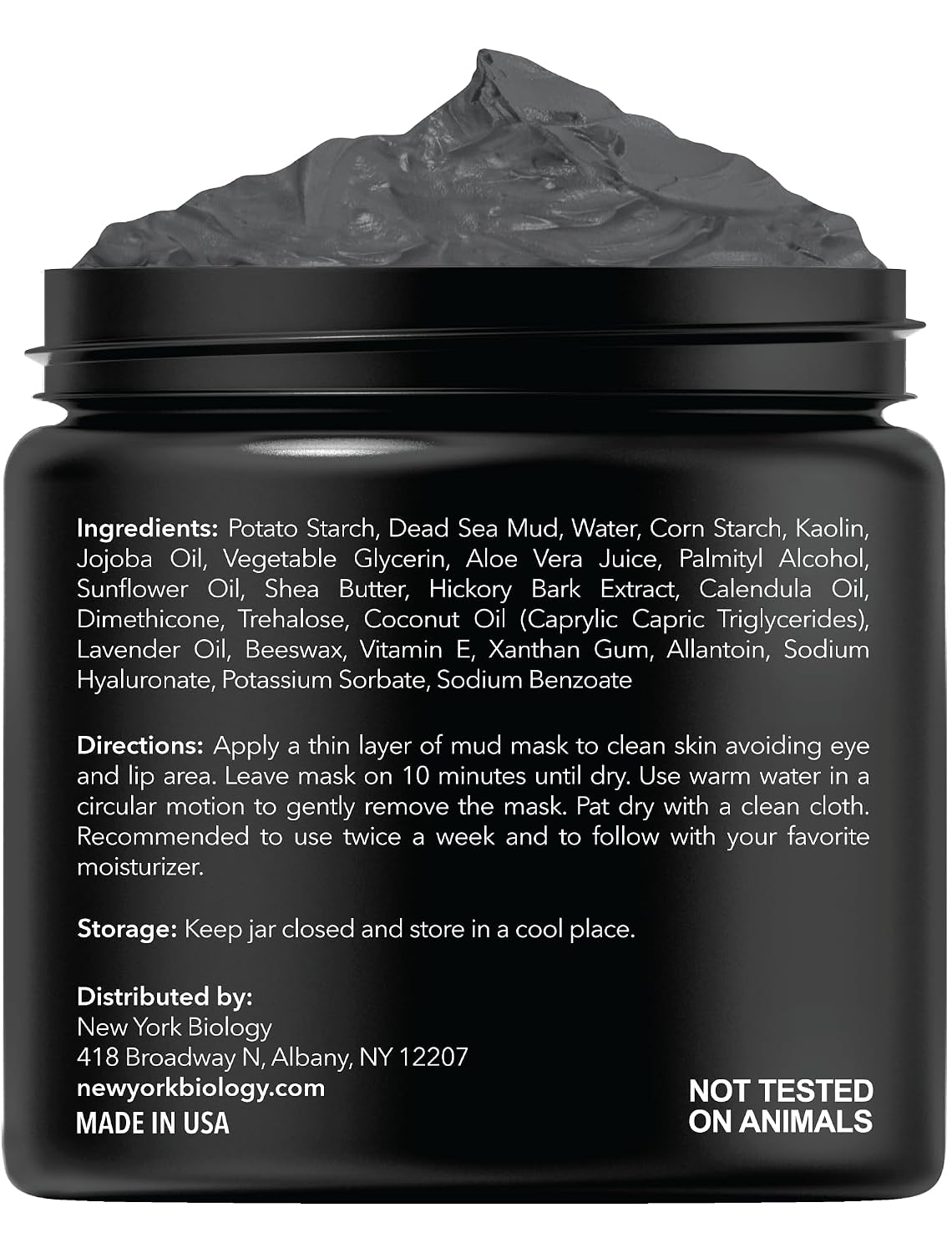
Dead Sea mud is one of those ingredients that gets invoked constantly in skincare marketing — and with enough credibility behind it that dismissing it outright would be wrong, but with enough hype layered on top that accepting the claims uncritically would be equally careless. The Dead Sea, a landlocked salt lake bordered by Israel and Jordan, sits roughly 430 meters below sea level, making it the lowest point on Earth’s surface. The extreme evaporation at that depth has concentrated its water and lakebed sediment into one of the most mineral-dense environments on the planet. The mud drawn from that lakebed — technically called peloid in balneotherapy (the science of therapeutic bathing and mineral-rich treatments) — contains elevated levels of magnesium, potassium, calcium, bromide, and sodium chloride at ratios meaningfully different from ordinary sea mud or standard clay. That distinction matters, but it doesn’t mean every jar labeled “Dead Sea mud” delivers it equally. This guide breaks down what the mineral science actually supports, where the marketing outpaces the evidence, and how to decide — by price tier — which products are worth your money.
What Dead Sea Minerals Actually Do (and What They Don’t)
Let’s start with the science that holds up. A research overview published by the National Center for Biotechnology Information on balneotherapy and the Dead Sea area documents clinically observed benefits for inflammatory skin conditions — psoriasis in particular — attributed to high magnesium chloride concentrations. Magnesium plays a documented role in skin barrier function: it supports ceramide synthesis (ceramides are the lipid molecules that hold your skin’s barrier together, like mortar between bricks) and has been observed to reduce trans-epidermal water loss (TEWL — the rate at which moisture escapes through skin). Paula’s Choice’s Ingredient Dictionary notes that topically applied magnesium is absorbed through the skin barrier, though the extent varies by formulation and contact time.
What does this mean practically? Authentic Dead Sea mud — meaning sediment genuinely sourced from the lakebed at meaningful concentration — can:
- Temporarily tighten pores by drawing out sebum and surface debris via the same adsorptive mechanism as clay masks, but with a gentler action than high-swelling bentonite
- Reduce surface inflammation in reactive or sensitized skin, supported by the magnesium and bromide content
- Improve short-term hydration — counterintuitively, because proper barrier function retains moisture more effectively than a compromised one
What it cannot credibly do: “detox” the skin (the skin is not a filtration organ; that claim is marketing language with no clinical backing), permanently shrink pores (pore size is structural and largely genetic), or replace clinical treatment for acne, eczema, or psoriasis. Allure’s editorial overview of mud masks makes the same point plainly: the tightening sensation you feel during a mud mask is real, but it reflects temporary mechanical action, not a structural change.
One critical distinction from clay: Kaolin and bentonite — the clays you’ll find in most drugstore masks — are aluminum phyllosilicates (layered mineral compounds). They work primarily through adsorption (drawing material to their surface) and, in bentonite’s case, swelling that mechanically extracts pore contents. Dead Sea mud is not technically a clay — it’s a mineral-rich sediment with a different particle structure and a notably higher salt and electrolyte concentration. Dermstore’s editorial overview of mud versus clay masks flags this difference directly: Dead Sea mud is generally gentler than high-swelling bentonite, making it more appropriate for dry or sensitive skin types that find bentonite too stripping.
The Sourcing Problem: Why “Dead Sea Mud” on a Label Is Not a Guarantee
Here is where practitioner-level skepticism pays off. The Dead Sea Works (the Israeli state-owned mineral extraction company) and private Jordanian and Israeli mineral exporters supply raw Dead Sea sediment globally, but there is no standardized certification that guarantees a finished product contains a therapeutically meaningful concentration of that sediment versus cheaper filler muds. A $12 jar from an unrecognized brand and a $65 jar from a specialty skincare house may both truthfully say “Dead Sea mud” — but the concentration, mineral retention through processing, and co-formulation quality differ dramatically.
What to look for on an ingredient list (INCI — International Nomenclature of Cosmetic Ingredients, the standardized naming system on all U.S. and EU labels):
- Maris Limus Extract or Maris Limus — the INCI term for Dead Sea mud extract. This should appear in the first half of the ingredient list for meaningful concentration.
- Magnesium Chloride and Potassium Chloride listed separately — signals the formulator is boosting the mineral profile beyond what the mud alone delivers
- Absence of high concentrations of synthetic fragrance (listed as “Parfum” or “Fragrance”) — particularly important if inflammation reduction is the goal, since synthetic fragrance is a common sensitizer
Harper’s Bazaar’s buyer’s guide on clay and mud masks consistently notes that fragrance-free or low-fragrance formulations outperform heavily scented alternatives for sensitive and reactive skin, even when the active mineral ingredient is equivalent.
By the Numbers: Cost-Per-Use Across Tiers
Dead Sea mud masks vary enormously in price. Here is a grounding framework before the tier analysis:
| Tier | Price Range | Avg. Applications per Jar | Cost Per Use |
|---|---|---|---|
| Entry (e.g., Ahava Purifying Mud Mask 100ml) | $18–$30 | 12–16 | $1.25–$2.50 |
| Mid (e.g., Premier Dead Sea Facial Mask) | $45–$80 | 16–22 | $2.25–$4.50 |
| Prestige (e.g., Sisley Paris Deeply Purifying Mask) | $130–$185 | 18–24 | $6.00–$9.50 |
Assumes a standard application of approximately 4–6ml per use, 1–2x weekly protocol.
The cost-per-use gap between entry and prestige narrows when you factor in that prestige formulations often carry higher mud concentration, more sophisticated delivery systems (hyaluronic acid, botanical extracts, or peptide co-ingredients), and better sensory execution — but it does not close. Entry-tier Dead Sea mud masks can deliver the core mineral benefit; what you lose is the co-formulation quality and ritual experience that prestige buyers are paying for.
Tier-by-Tier Decision Frame
Entry Tier ($10–$35): Ahava, Queen Helene, and Generic Dead Sea Imports
Ahava is the clearest value proposition at entry level. The brand sources directly from the Dead Sea through a long-standing extraction license and has published ingredient transparency that is unusually clear for the price point. Byrdie’s expert roundup on Dead Sea mud masks consistently cites Ahava’s Purifying Mud Mask as a benchmark entry product — reviewers report noticeable pore-clearing action and manageable drying effect even on combination skin.
Ingredient conflict note: Entry Dead Sea mud masks often omit active exfoliants, which is actually an advantage — they are generally safe to use on non-retinoid nights without concern. If your routine includes a retinoid (tretinoin, retinol, or retinaldehyde), schedule your mud mask on off-nights; the temporary barrier disruption from either product is compounded when layered. Do not use a mud mask the same evening you’ve applied a vitamin C serum with a low pH (typically below 3.5) — the potential for irritation on sensitized skin is meaningful.
If X, then Y: If you are new to mud masking or testing Dead Sea mud against your skin’s tolerance, the Ahava entry line is the rational starting point. Validate the format works for you before investing in higher tiers.
Mid Tier ($45–$85): Premier Dead Sea, OSEA, and Formulations with Substantive Co-Ingredients
The mid tier is where co-formulation quality starts to justify the premium. Products in this range typically pair Dead Sea mud with meaningful secondary actives — hyaluronic acid for hydration offset (important because the high mineral salt content can over-dry if used incorrectly), niacinamide for barrier support, or botanical anti-inflammatory agents. OSEA’s Malibu Cleanser and sea-mud products are frequently cited in Byrdie and Allure roundups for their clean-formulation approach with verified marine sourcing.
The tradeoff to name explicitly: Mid-tier Dead Sea mud masks are often positioned as “clean” or “natural,” which can mean shorter preservation systems and shorter shelf life after opening. Check the PAO symbol (the open-jar icon with a number — “12M” means 12 months after opening). If you’re masking once weekly, a 100ml jar at 5ml per use lasts you roughly 20 uses — plan accordingly.
If X, then Y: If your skin is dry-to-combination, reactive, or you’re managing rosacea-adjacent sensitivity, the mid tier’s hydration-boosted formulas are worth the step up. The magnesium benefit is real, and the gentler delivery system matters more at this skin type.
Prestige Tier ($130+): Sisley Paris, La Mer, and Professional-Adjacent Formulations
At this tier, the Dead Sea mud content is typically one element in a sophisticated multi-active formula rather than the headline ingredient. Sisley Paris’s Deeply Purifying Mask with White Kaolin layers plant extracts, kaolin, and gentle enzymatic action alongside mineral content — the mud’s role is balancing, not dominant. La Mer’s mask portfolio at $350+ is positioned as a full-ritual luxury product; the cost-per-use math does not favor it on mineral delivery alone, but the formulation complexity, sensory experience, and post-mask skin feel are consistently reported by long-term users as qualitatively distinct.
For estheticians and spa buyers sourcing professional-grade Dead Sea mud for treatment room application — Phytomer’s marine mud line and Eminence Organics’ professional body mud products are the relevant reference points. Phytomer in particular has published clinical data supporting its Oligoforce formulations’ efficacy in a professional application context.
Ingredient conflict note for prestige buyers: Several prestige formulas in this tier include alpha-hydroxy acids or enzymes as co-actives. If your home routine includes a retinoid, this is where conflicts become more clinically significant. Confirm with your esthetician before layering a prestige mud mask containing AHAs over a retinoid-active week.
If X, then Y: If cost-per-use at the prestige tier is under $8 and the mask is replacing a separate pore-clearing step and a separate mineral-treatment step in your protocol, the consolidation can make the math work. If it is a standalone addition to an already complete routine, the entry or mid tier delivers the core Dead Sea mineral benefit at a fraction of the price.
The Bottom Line
Dead Sea mud is a legitimately differentiated ingredient — not a marketing fiction, but also not magic. The mineral profile, particularly magnesium and bromide concentration, is supported by clinical research for barrier function and mild anti-inflammatory action, per the NCBI’s balneotherapy literature. The sourcing and concentration variability across price tiers is real, and reading INCI listings for Maris Limus placement is your most reliable quality signal. Entry-tier products from transparent-sourcing brands deliver the core benefit; prestige tiers add formulation complexity and ritual value that are legitimate at the right cost-per-use calculation, not automatically worth it.
Conflict-check your routine before adding any mud mask: off nights from retinoids, away from low-pH vitamin C. Then decide by tier based on your skin type, your protocol gaps, and what the per-use number actually looks like across a jar’s realistic lifespan. The mineral hype isn’t all hype — but you now have the frame to know exactly how much of it is yours to claim.