Clay cleansers sound almost paradoxical if you’re new to them: you’re rubbing minerals dug from the earth onto your face to make it cleaner. But here’s the plain-language version of what’s actually happening. Clay is a naturally absorbent mineral material — meaning it physically draws oil, debris, and some surface-level impurities into its structure while it sits on your skin. A clay cleanser (as opposed to a clay mask, which sits for 10–20 minutes) is rinsed off quickly, giving you a fraction of that oil-absorbing action plus normal cleansing, without the prolonged contact that makes masks too aggressive for everyday use. If you have oily or combination skin, a well-formulated clay cleanser used daily can keep pores looking clearer and skin feeling balanced — without the tight, sandpaper sensation that gives clay a bad reputation. This guide breaks down the ingredient science, explains which clay types are actually safe for daily use, and maps out clear product picks across every price tier.
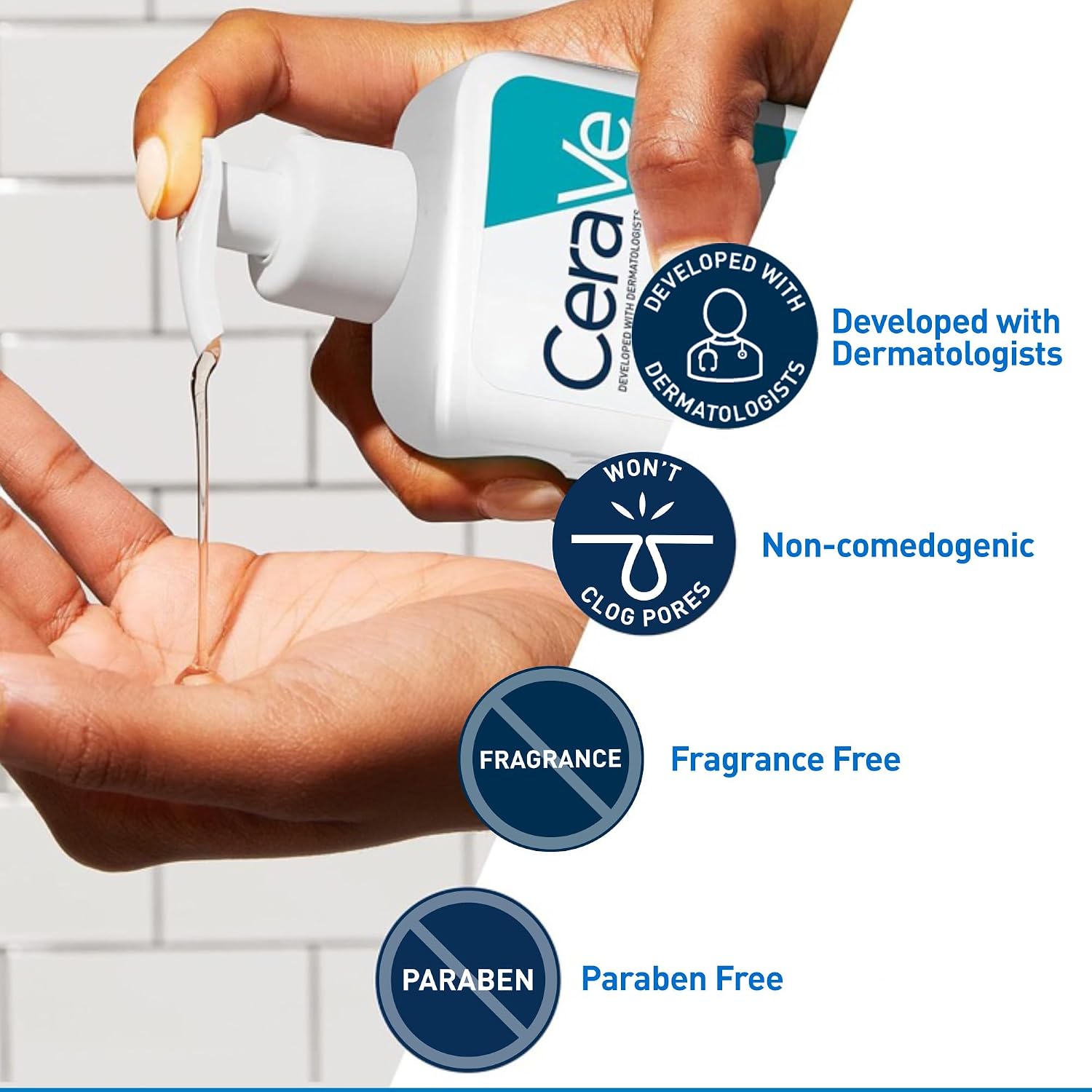
| EDITOR'S PICK[RODAN + FIELDS Redefine Daily F…](https://www.amazon.com/dp/B07L2M7B6S?tag=greenflower20-20) | Mid-tier[CeraVe Acne Treatment Face Wash](https://www.amazon.com/dp/B0GP7S44MT?tag=greenflower20-20) | Budget pick[TOCOBO Coconut Clay Cleansing F…](https://www.amazon.com/dp/B0GX9FLJRP?tag=greenflower20-20) | |
|---|---|---|---|
| Key clay | — | Purifying Clay | Coconut Clay |
| Active | — | Salicylic Acid | — |
| Size | 125 mL | 8 Fl Oz | 150 ml |
| Format | Cleanser | Cleanser | Cleansing Foam |
| Additional | — | Niacinamide, Ceramides | — |
| Price | $45.00 | $14.24 | $14.00 |
| See on Amazon → | See on Amazon → | See on Amazon → |
Why “All Clay Is Not the Same” Is More Than Marketing Copy
If you’ve spent any time in skincare communities, you’ve heard this. But it’s worth grounding it in specifics, because the clay-type distinction is the single most important decision variable in daily-use suitability.
Kaolin is the workhorse clay for daily cleansers. It’s a phyllosilicate mineral (a layered silicate structure) with relatively mild adsorption — it picks up surface sebum and some particulates without aggressively pulling moisture from the deeper layers of the skin. Paula’s Choice Ingredient Dictionary describes kaolin as appropriate for most skin types, including sensitive, because its adsorptive capacity is lower than ionic clays like bentonite. The NCBI’s published review of clay minerals in skin care (PMC7522225) confirms that kaolin’s net-negative charge is weak relative to smectite-group clays, which is exactly why formulators reach for it in rinse-off daily products.
Bentonite (a smectite-group clay) has much higher swelling capacity and stronger ionic adsorption. That’s why it’s the hero in once-weekly masks and spot treatments. Allure’s explainer on bentonite clay notes that dermatologists frequently caution against daily use on the face specifically because its aggressive adsorption doesn’t distinguish between unwanted sebum and the skin’s protective lipid layer. Bentonite in a rinse-off cleanser isn’t automatically dangerous — contact time is short — but formulators have to balance it carefully, and you’ll want to check the full ingredient list before committing to daily use.
French Green Clay (illite) sits somewhere in the middle: mineral-rich, moderately absorbent, genuinely good for oily and congested skin, but again better suited to weekly use or short-contact formats unless the formula is specifically buffered with humectants.
The practical rule: for daily use, kaolin-dominant formulas are the lower-risk default. If bentonite or French green clay appears in the first five ingredients of a rinse-off cleanser, treat it as a 3x-per-week product until your skin signals otherwise.
The Barrier Stripping Problem — and How Formulators Solve It
Here’s the tradeoff that sits at the center of this topic. Clays are adsorptive, which means they don’t selectively strip only excess oil. Without counterbalancing ingredients, they can degrade the skin’s moisture barrier — the outermost protective layer made up of lipids, proteins, and ceramides that prevents transepidermal water loss (TEWL, meaning water evaporating out of your skin) and keeps irritants out. A compromised barrier shows up as tightness after washing, increased sensitivity, reactive breakouts, and, ironically, more oil production as sebaceous glands overcompensate.
The formulation solutions are well-established:
- Glycerin and other humectants (hyaluronic acid, panthenol) bind water in the skin and counteract the drying pull of clay. Byrdie’s roundup of best clay face washes consistently flags glycerin placement in the first five ingredients as a green flag for daily suitability.
- Non-comedogenic emollients (squalane, jojoba esters) restore lipid feel without blocking pores — critical for oily skin types who still need some slip back after cleansing.
- Gentle surfactant systems — sodium cocoyl isethionate, glucosides, or amino acid-derived surfactants — clean without disrupting skin pH as aggressively as sulfate-based systems. Vogue’s buyer’s guide on clay cleansers notes that the best formulas pair mild surfactants with clay rather than relying on clay as the sole cleansing mechanism.
Dermstore’s editorial guidance on clay cleansers adds a useful protocol point: even with a well-formulated daily clay cleanser, following immediately with a moisturizer or hydrating toner (the step where you put moisture back in) is not optional — it’s part of making the format work long-term.
By the Numbers: Clay Cleanser Daily Use — Quick Reference
| Clay Type | Adsorption Strength | Recommended Frequency | Best Skin Type Match |
|---|---|---|---|
| Kaolin | Low–Moderate | Daily | Oily, Combination, Sensitive-Oily |
| Bentonite | High | 2–3x per week (rinse-off) | Oily, Acne-Prone |
| French Green (Illite) | Moderate–High | 3x per week | Oily, Congested |
| White Kaolin Blend | Low | Daily | Dry-Combination, Sensitive |
Product Decision Framework Across Price Tiers
This is where the decision gets real. The market segments cleanly into three tiers with distinct formulation philosophies, and cost-per-use math changes the value calculation significantly.
Entry Tier ($10–$25): Volume Play, Kaolin-Forward
Neutrogena Pore Purifying Clay Cleanser is the canonical entry point. Kaolin-based, glycerin-buffered, straightforward. Across aggregated reviews on Dermstore and Byrdie, owners consistently report it clears surface congestion without significant dryness when followed with a moisturizer. At roughly $10–$12 for a 200ml tube, with a daily dose running approximately 1–1.5ml, cost-per-use lands under $0.10. That’s the standard to beat.
The honest tradeoff at this tier: fragrance is present in most formulas (Neutrogena included), which is the most common sensitivity trigger in rinse-off products. If your skin is reactive, this matters even with short contact time.
Aztec Secret Indian Healing Clay is a powder bentonite product that some users mix into a DIY cleanser, but it’s engineered as a mask. Using it as a daily cleanser is a formulation mismatch — the adsorption is too aggressive without a manufacturer-calibrated surfactant system to moderate it. Worth flagging because its popularity in oily-skin communities sometimes leads to this misuse.
Mid-Tier ($45–$85): Formulation Sophistication
At this tier, you’re paying for ingredient architecture — specifically, for formulators who built the humectant and emollient buffering system into the product rather than leaving that to you.
Tatcha The Deep Cleanse (approximately $38–$42 for 150ml) uses a Japanese luffa botanical complex alongside a mild surfactant base. It’s not a traditional clay cleanser by ingredient list, but it occupies the same use-case niche with a more skin-identical lipid approach. Reviewers at Byrdie rate it consistently for the “clean without stripped” outcome on combination skin.
Herbivore Lapis Blue Tansy Oil Cleanser moves away from clay entirely in favor of blue tansy and plant oils, targeting congestion through different biochemistry — relevant to mention because at the $40–$50 price point, buyers choosing between clay and oil-cleansing formats should know the mechanisms differ meaningfully for different skin profiles.
The genuinely strong mid-tier clay cleanser position belongs to OSEA Malibu and Bioelements formats in this range. OSEA’s Ocean Cleanser ($42 for 150ml) uses kaolin with a seaweed mineral complex; esthetician-sourced reviews note it’s a reliable daily-use option for combination-to-oily clients who are also using active treatments. Cost-per-use: approximately $0.28–$0.35 per wash — still defensible for a daily-use staple.
Prestige Tier ($85–$350+): Treatment-Room Logic Applied to Home Use
At this tier, the value calculation requires cost-per-use discipline. Sisley Paris Phyto-Blanc Lightening Cleansing Foam (in the $85–$110 range) and formulas from Phytomer and La Mer use clay as one component within complex delivery systems — typically paired with botanical actives, rare mineral extracts, or advanced emollient systems that justify the unit economics when amortized.
La Mer’s Cleansing Gel ($95 for 200ml) is not a clay cleanser by primary mechanism, but spa directors sourcing it for treatment room use note that per-application cost runs approximately $0.48–$0.60 — which, in a professional treatment context where it’s part of a $150+ facial menu, is fully rational. The prestige clay cleanser niche is genuinely thinner than the mask category; most prestige brands invest their clay formulation R&D into leave-on or extended-contact products rather than rinse-offs.
The honest prestige-tier verdict: if your goal is daily pore-clearing via a rinse-off format, the mid-tier options often match prestige on the core functionality. The case for prestige here is ritual experience, scent architecture, packaging tactility, and brand ecosystem (loyalty rewards, personalized service) — not a step-change in barrier-safe clay delivery.
Ingredient Conflict Check: What Not to Stack
This section is non-negotiable on this site. Clay cleansers play well with most routines, but there are real conflicts:
- Retinoids (retinol, tretinoin, retinal): If you’re using a prescription retinoid, a high-adsorption clay cleanser (bentonite-heavy) may exacerbate the barrier sensitivity that retinoids already cause, especially in the first 8–12 weeks of use. Kaolin-based, glycerin-rich cleansers are the lower-risk pairing. Time your clay cleanser to the morning, retinoid to the evening.
- Exfoliating acids (AHAs, BHAs, PHAs): Same principle. Salicylic acid (a BHA) is frequently combined with clay in cleansers specifically because both target sebum and congestion — that combination is intentional and generally fine. But if your toner or serum already contains glycolic or lactic acid, a high-adsorption clay cleanser the same morning can push the barrier past its tolerance. Dermstore’s editorial guidance flags this combination specifically.
- Vitamin C (L-ascorbic acid serums): Clay cleansers don’t chemically conflict with vitamin C, but if your vitamin C serum is pH-sensitive (most L-ascorbic acid formulas work best at pH 2.5–3.5), a clay cleanser that leaves skin slightly more alkaline than usual can reduce absorption. This is a protocol timing issue more than a safety issue — apply vitamin C after a non-clay morning wash if you notice reduced efficacy.
The Decision Rule
If you’re building a daily-use protocol and have oily to combination skin with visible pore congestion: a kaolin-dominant, glycerin-buffered rinse-off cleanser used once daily (morning or evening, not both) is a sound, evidence-supported choice across all price tiers. Entry-tier delivers core functionality; mid-tier adds formulation nuance that matters most if you’re already using actives; prestige tier is justified if you’re in a professional treatment context or the ritual dimension of your routine has genuine value to you.
If your skin is dry-combination, or you’re in an active retinoid adjustment phase: default to a non-clay gentle cleanser as your daily driver and reserve clay formats for 2–3x weekly use until your barrier is stable.
The formulation details — clay type, humectant position in the INCI list, surfactant system — matter more than price. A $12 kaolin cleanser with glycerin in the second position outperforms a $95 formula with bentonite-forward, fragrance-heavy architecture for everyday barrier-safe use. Do the ingredient check before the price check.