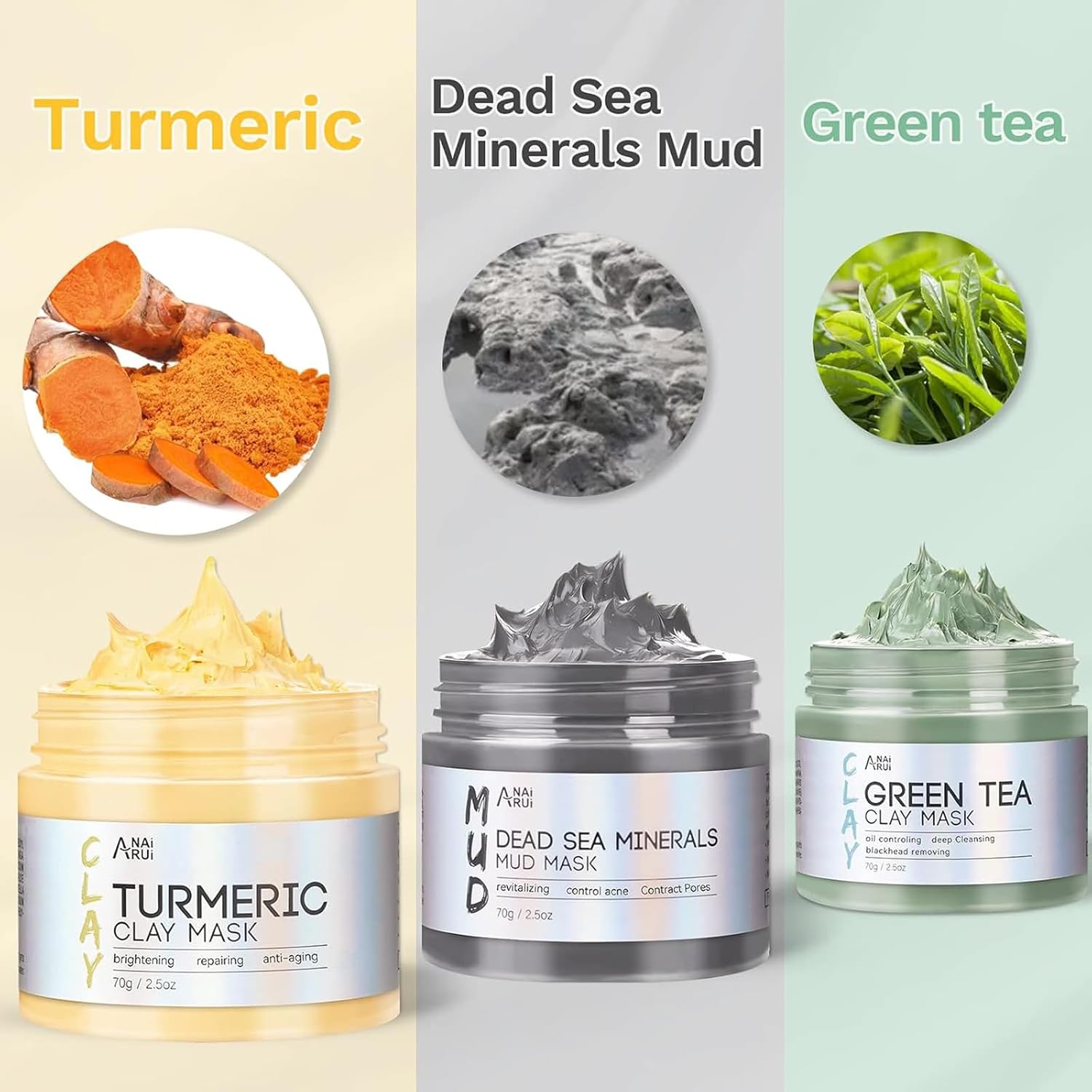
If you’ve ever stood in a beauty aisle reading a clay mask label and wondered why turmeric and vitamin C keep showing up alongside ingredients like kaolin or bentonite — two minerals historically used to draw excess oil and impurities out of pores — you’re asking exactly the right question. Clay masks work by physically adsorbing (binding to their surface) sebum and debris as they dry. Vitamin C is a well-established antioxidant that targets uneven skin tone and dullness when applied topically. Turmeric contributes curcumin, a plant compound with documented anti-inflammatory and mild skin-brightening properties, per research published by the National Center for Biotechnology Information. When these three categories of ingredients appear in a single formula, the pitch is efficient: one mask that clears pores and brightens. The pitch is real — but the execution matters a great deal, and a few ingredient interactions can quietly undermine your results or irritate your skin. This guide will show you which formulas get the balance right, how to use them safely, and which tradeoffs you’re actually making at each price point.
Why This Combination Works — and Where It Gets Complicated
The appeal of a vitamin C–turmeric clay mask is compression: you’re folding two distinct functional steps into one application. But each ingredient class has its own chemistry, and pairing them creates decision points that are worth naming explicitly.
Clay type is not interchangeable. This is a point Paula’s Choice Skincare Encyclopedia addresses directly — kaolin is a mild, fine-particle clay suitable for normal-to-dry and sensitive skin. It absorbs surface oil without significantly disrupting the skin barrier. Bentonite, by contrast, is a swelling clay that expands on contact with moisture and exerts stronger suction on pores. It is genuinely effective for oily and congested skin but can be too aggressive for dry or sensitized skin, especially when you’re also layering in active brightening compounds. Fuller’s earth (multani mitti) sits closer to bentonite on the absorbency spectrum. When you see a brightening mask marketed for “all skin types,” check the clay. If it’s bentonite as the primary clay base, the “all skin types” claim deserves skepticism.
Vitamin C stability in a clay matrix is a genuine formulation challenge. L-ascorbic acid (the most bioavailable form of vitamin C) oxidizes rapidly on exposure to air, light, and alkaline pH environments. Clay is naturally alkaline. Formulators work around this by either using stabilized vitamin C derivatives — ascorbyl glucoside, sodium ascorbyl phosphate, tetrahexyldecyl ascorbate — or by formulating in tightly controlled pH ranges. As Allure’s vitamin C skincare guide notes, the derivative matters: ascorbyl glucoside is gentler and more stable but requires enzymatic conversion in skin before it becomes active. The tradeoff is milder brightening with lower oxidation risk — a reasonable exchange in a rinse-off format like a mask, where contact time is limited anyway.
Curcumin’s brightening mechanism is different from vitamin C’s. Vitamin C interrupts melanin synthesis upstream, at the tyrosinase enzyme stage. Curcumin, per NCBI-published research on its human health effects, operates partly as an anti-inflammatory compound that reduces post-inflammatory hyperpigmentation (the dark marks left after breakouts or irritation) rather than suppressing melanin production directly. These two pathways are complementary, not redundant, which is why the pairing has genuine logic — but neither compound delivers dramatic results in the ten to twenty minutes a mask sits on your face. Consistency over weeks is what moves the needle on uneven tone.
The Ingredient Conflicts You Need to Map Before Buying
This is where practitioners differentiate from enthusiasts. Before you slot a brightening clay mask into a routine, you need to know what it cannot coexist with — or at least, cannot coexist with on the same day or on sensitized skin.
Retinoids. Using a clay mask, particularly one with bentonite or fuller’s earth, on the same day as a retinoid (retinol, retinaldehyde, or prescription tretinoin) substantially increases irritation risk. The clay strips the lipid barrier; the retinoid then penetrates more aggressively and causes inflammation. Bright-side use: some practitioners find alternating a brightening clay mask on days off from retinoids actually enhances overall results by maintaining skin clarity between retinoid applications. If you’re on a nightly retinoid, mask on retinoid-free nights only.
Exfoliating acids (AHAs and BHAs). Glycolic acid, lactic acid, and salicylic acid are common partners in “pore-clearing” formulas. If your brightening clay mask already contains BHA (salicylic acid is fat-soluble and goes into pores), do not follow it with a separate acid toner on the same evening. Reviewers at Byrdie consistently flag this double-exfoliation trap as a leading cause of post-mask sensitivity. Read the full INCI list, not just the marketing claims.
High-concentration vitamin C serums. If you apply a dedicated vitamin C serum before a clay mask, the mask will largely pull it off your skin before absorption is complete. Sequence matters: if both products are part of your routine, apply the mask first, rinse, then proceed with your vitamin C serum on clean skin. The reverse sequence wastes product and money.
Staining from turmeric. This is a practical concern, not a safety one. Curcumin is a powerful pigment — it will stain grout, white sink basins, and light-colored towels. Have a dedicated dark washcloth. Most rinse-off formulas are formulated to minimize skin staining, but high-curcumin formulas left on for extended periods can leave a faint yellow cast on very fair complexions. Follow product timing instructions exactly.
By the Numbers: Vitamin C–Turmeric Clay Mask Tiers
| Price Tier | Typical Clay Base | Vitamin C Form | Cost Per Use (est.) |
|---|---|---|---|
| $10–$20 (entry) | Kaolin or bentonite | Ascorbic acid or ascorbyl glucoside | $0.40–$0.90 |
| $35–$65 (mid) | Kaolin blend or white clay | Ascorbyl glucoside or sodium ascorbyl phosphate | $1.50–$3.00 |
| $90–$150 (prestige) | Proprietary clay complex | Tetrahexyldecyl ascorbate or stabilized L-AA | $4.00–$8.00 |
Cost per use based on approximately 1–2 applications per week from standard jar sizes. Prestige formats often include added actives — peptides, niacinamide, bakuchiol — that shift the value calculation.
How to Evaluate Specific Products at Each Tier
Entry tier ($10–$20): The category anchor here is Aztec Secret Indian Healing Clay, a pure calcium bentonite powder that you mix yourself with apple cider vinegar or water. It contains no vitamin C or turmeric, but its widespread use as a base for DIY brightening blends — users commonly add turmeric powder and vitamin C powder — makes it a practical starting point for understanding how the clay behaves before investing more. Harper’s Bazaar’s clay mask roundup consistently positions it as a benchmark for absorbency. For buyers adding active powders: the pH of your mixing liquid matters. Apple cider vinegar (pH ~3) partially addresses the stability problem for L-ascorbic acid; water alone (pH ~7) doesn’t.
For pre-formulated entry options in this combination, the Neutrogena Clay line and Freeman brand products regularly appear in aggregated reviews as accessible starting points — kaolin-based, with gentler vitamin C derivatives, suitable for testing sensitivity before stepping up in price.
Mid-tier ($35–$65): This is where formulation sophistication genuinely improves. Herbivore Botanicals and similar brands in the $45–$65 range typically invest in stabilized vitamin C derivatives, buffered pH, and kaolin-dominant clay blends that are meaningfully less aggressive than bentonite. For oily or acne-prone skin, brands in this tier with a BHA addition (salicylic acid at 0.5–1%) alongside clay and brighteners offer a real functional upgrade. Vogue’s coverage of turmeric skincare products notes that formulators working in this price band tend to include curcumin extract rather than raw turmeric powder, which reduces staining risk and improves concentration control.
The informed middle-ground choice for practitioners building a professional-referral list: look for masks in this tier that list both a clay type and a vitamin C derivative explicitly on the product page, not just in the INCI list. Transparency about the vitamin C form is a meaningful signal about formulation rigor.
Prestige ($90+): At this tier, the clay base often becomes secondary to a proprietary treatment complex. Sisley Paris formulas, for example, integrate botanical actives at concentrations that require a stable, precisely engineered base — the clay is part of a texture and delivery system, not primarily a pore-clearing agent. Buyers here are purchasing a ritual experience alongside functional performance, which is a legitimate reason to invest, not a naive one. The cost-per-use math at $130 for a jar yielding 16–20 applications works out to roughly $6.50–$8 per use — comparable to a weekly professional treatment amortized over a month, which is a defensible frame for a luxury skincare collector.
The Decision Rule: If X, Then Y
Here’s the practical decision frame for slotting a brightening clay mask into an existing routine:
If your skin is oily-to-combination and your primary goal is pore clarity with a secondary brightening benefit: Choose a bentonite or fuller’s earth formula with a stabilized vitamin C derivative and no added AHA/BHA (to control your exfoliation variables). Use 1x weekly. Do not use on retinoid nights.
If your skin is normal-to-dry or sensitized and brightening is your primary goal: Choose a kaolin-only clay base with tetrahexyldecyl ascorbate or sodium ascorbyl phosphate. Limit use to once every 10–14 days and treat it as a targeted brightening treatment rather than a pore mask.
If you’re building a professional or esthetician-adjacent menu of home-use recommendations: Steer clients toward mid-tier stabilized formulas with explicit INCI transparency. Flag the retinoid conflict explicitly — it’s the most commonly missed interaction and the most common source of post-treatment complaints.
If you’re a prestige buyer with an established, complex routine: The clay element in a prestige brightening mask is rarely aggressive enough to conflict with barrier-supporting steps. The primary safety check is timing against retinoids and direct-acid serums. Everything else — peptides, niacinamide, ceramides — coexists comfortably with this format.
The one universal rule across all tiers: read the vitamin C form on the label. If it isn’t listed, assume the least stable and least effective form, and adjust your expectations accordingly. A thoughtfully formulated $18 kaolin mask with ascorbyl glucoside will outperform an opaque $95 formula that hides behind vague “brightening complex” language every single time.