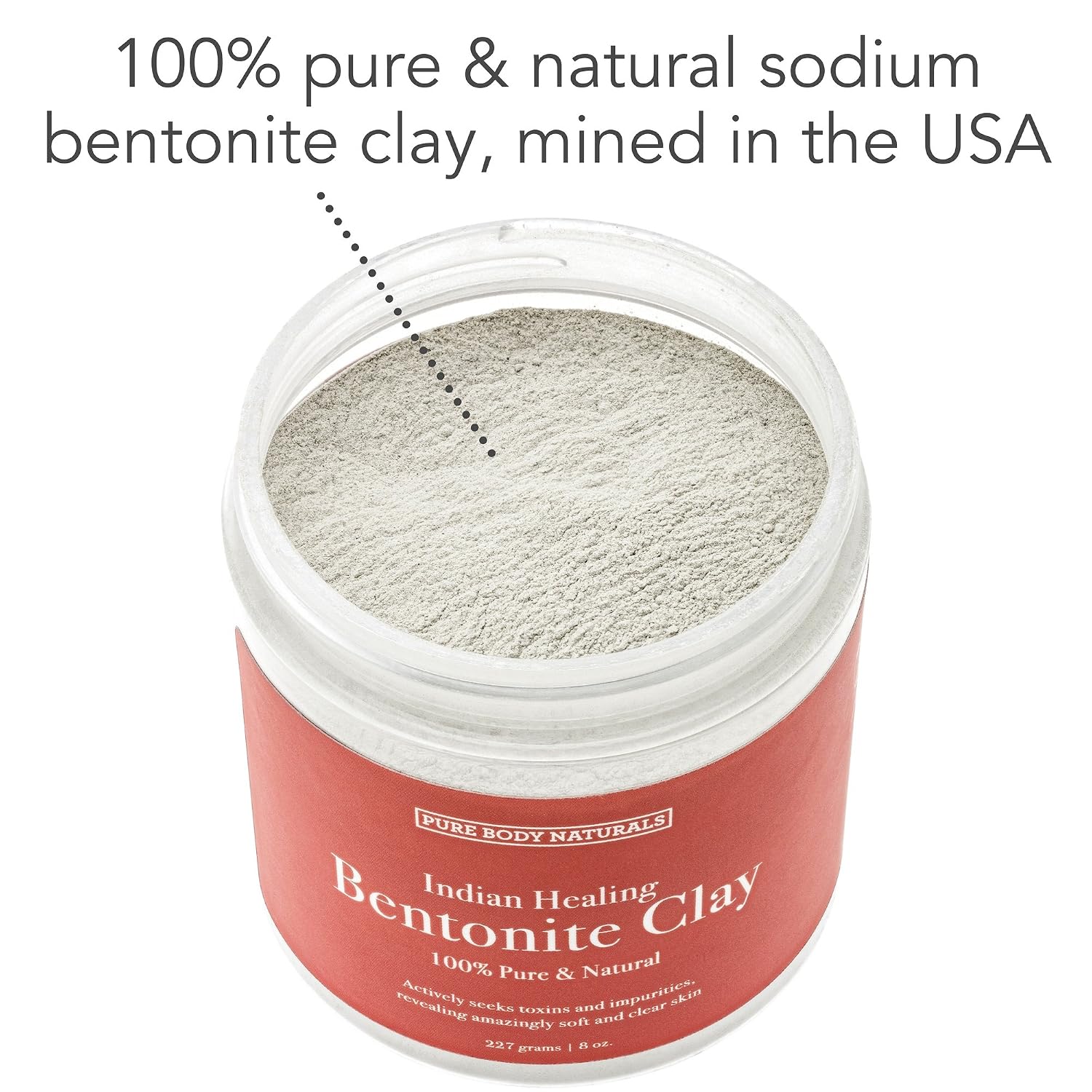
If you have oily or acne-prone skin, you’ve probably heard someone mention a clay mask. Here’s the short version of what that means: clay — specifically bentonite clay, a fine mineral powder mined from volcanic ash deposits — physically attracts excess oil, surface debris, and some pore-clogging material through a process called adsorption (that’s “ad-,” not “ab-” — the oil clings to the outside of the clay particle rather than being absorbed into it). You apply it wet, it dries on your face, and when you rinse it off it takes a meaningful amount of that excess sebum with it. The result, if the formula is well-built, is temporarily tighter-looking pores and a noticeably matte, clearer complexion.
What this article is here to do is cut through the noise on pricing. Bentonite clay masks span from a raw $8 jar to a $58 boutique formula — and the difference is not always what you think. Some of the gap is ingredient quality and supporting actives. Some is suspension technology, fragrance, and packaging. Some is pure brand premium. This guide maps the full ladder so you can make a considered buy at whatever tier fits your routine and budget.
| EDITOR'S PICK[Borghese Advanced Fango Active](https://www.amazon.com/dp/B08XY82146?tag=greenflower20-20)… | Mid-tierAztec Secret | Budget pick[Pure Body Naturals Bentonite Cl](https://www.amazon.com/dp/B00M16MHHA?tag=greenflower20-20)… | |
|---|---|---|---|
| Form | Pre-mixed mud | Powder | Powder |
| Size | 7.5 oz | 16 oz | 8.0 oz |
| Additives | Hyaluronic Acid | None | None |
| Base Clay | Bentonite | Calcium Bentonite | Bentonite |
| Price | $58.00 | $15.95 | $7.49 |
| See on Amazon → | See on Amazon → | See on Amazon → |
What You’re Actually Paying For as the Price Goes Up
Before we walk the ladder, it helps to understand the real cost variables. Bentonite clay itself is an inexpensive commodity ingredient. Paula’s Choice’s Ingredient Dictionary notes it as a well-studied absorbent with a strong safety profile, but the clay alone isn’t what differentiates a $12 formula from a $55 one.
What actually moves the price:
1. Clay concentration and sourcing grade. Raw jar bentonite (think Aztec Secret Indian Healing Clay) is essentially one ingredient: 100% calcium bentonite clay. That purity is the product. Formulated masks dilute the clay with emollients, humectants, and actives — which adds cost but also adds skin-barrier protection that a pure clay can’t offer.
2. Supporting actives. Kaolin (a gentler clay, note: kaolin does not “detox” — it simply absorbs surface oil with less aggressive ion exchange than bentonite), niacinamide, salicylic acid, zinc, and botanical extracts each add cost. A formula with 2% niacinamide and encapsulated salicylic acid costs meaningfully more to produce than straight clay in water.
3. Preservative and suspension systems. Getting bentonite to stay evenly distributed in a jar — not separate, not go rancid — requires investment in formulation chemistry. Cheaper masks sometimes show separation or inconsistent texture across the jar’s lifespan.
4. Packaging. Airless pumps, UV-protective glass, and clinical tubes all cost more than a plastic tub. They also meaningfully extend shelf stability, which matters for active ingredients.
As the NCBI’s review of clay minerals in skin care notes, the efficacy of clay-based formulations is strongly tied to particle size, surface area, and the ionic environment created by companion ingredients — meaning a $12 jar of raw clay and a $50 formulated mask are doing related but genuinely different things to your skin.
The Dupe Ladder: Four Tiers, Clear Tradeoffs
Tier 1 — $8–$15: The Raw-Ingredient Tier
Representative product: Aztec Secret Indian Healing Clay (~$10–$14 for 1 lb)
This is 100% calcium bentonite clay. Nothing else. You mix it yourself with apple cider vinegar or water, apply, and rinse. Reviewers across Byrdie and Allure’s coverage of clay masks consistently cite it as one of the most effective single-ingredient options for visibly drawing out pore congestion — the “pulsing” sensation users report is the clay’s ionic activity pulling oil toward the surface.
What you get: Maximum clay concentration, maximum oil absorption, extremely low cost-per-use (a 1-lb jar yields approximately 50–70 full-face applications, putting cost-per-use at roughly $0.15–$0.25).
What you don’t get: Any barrier protection. No humectants, no emollients, no actives to address post-extraction redness. If you leave this on too long — or have a compromised skin barrier — you will over-strip. Allure’s coverage of bentonite clay notes that using raw clay for longer than 10–15 minutes on sensitive or dry-combination skin increases the risk of transient irritation and barrier disruption.
Conflict note: Do not layer or same-day combine raw bentonite with retinoids, exfoliating acids (AHAs/BHAs), or vitamin C. The clay’s pH-altering effect and its aggressive oil removal can amplify the irritation potential of all three.
Decision rule: If your primary goal is visible pore clearing on a budget, and your barrier is intact (not flaky, not sensitized), this tier wins on pure value. It is not a “lesser” product — it’s a different product category.
Tier 2 — $16–$28: The Formulated-Entry Tier
Representative products: Neutrogena Deep Clean Purifying Clay Cleanser/Mask ($10–$14), Freeman Beauty Charcoal & Black Sugar Mud Mask ($7–$10), L’Oréal Paris Pure-Clay Mask in Exfoliate & Refining (~$12–$15)
This tier mixes bentonite or kaolin clay (or both) with modest supporting ingredients — gentle exfoliants, fragrance, basic emollients — inside a ready-to-use format. No mixing required, built-in rinse-off ease, more predictable application thickness.
What you get: Convenience, some formulation stability, and the addition of basic skin-feel ingredients that reduce the harshness of raw clay. Byrdie’s reviews of drugstore clay masks note that these formulas tend to dry more slowly and feel less tight than raw clay, which is a meaningful tactile upgrade for first-time or infrequent users.
What you don’t get: Meaningful therapeutic actives. The “charcoal” in charcoal-clay hybrid masks at this tier is typically present at cosmetic rather than functional concentrations. Paula’s Choice’s ingredient analysis of activated charcoal notes that, while it is an adsorbent, evidence for its performance advantage over plain clay in leave-on masks is limited.
Conflict note: Some Tier 2 products include fragrance or essential oils that can sensitize the skin barrier — check ingredient lists if you’re running actives like tretinoin or glycolic acid in your routine.
Decision rule: This tier is for the user who wants weekly maintenance with zero prep friction. It’s also a reasonable starting point for teenagers or first-timers who’ve never used a clay mask and want training wheels before committing to a potent formula.
Tier 3 — $29–$45: The Active-Delivery Tier
Representative products: Herbivore Blue Tansy Invisible Pores Resurfacing Mask ($48, sits at the tier ceiling), Peter Thomas Roth Therapeutic Sulfur Acne Mask ($35–$42), Glamglow Supermud Clearing Treatment (~$38–$42)
This is where formulation intentionality starts to earn its price. Masks in this range combine clay with at least one functional active at a concentration that does measurable work: sulfur (a time-tested acne and oil-control ingredient), BHA (beta-hydroxy acid, specifically salicylic acid, which is oil-soluble and penetrates pores to dissolve debris from the inside), or botanical-derived anti-inflammatories.
By the numbers — Tier 3 cost-per-use:
- Peter Thomas Roth Sulfur Mask (3.4 oz / ~20 applications): ~$1.75–$2.10 per use
- Glamglow Supermud (1.7 oz / ~12 applications): ~$3.00–$3.50 per use
- Herbivore Blue Tansy (1.7 oz / ~12 applications): ~$3.75–$4.00 per use
What you get: A mask that does more than absorb — it actively addresses acne-causing bacteria (sulfur), exfoliates inside the pore (BHA), or calms post-extraction inflammation (blue tansy’s azulene content). Reviewers at Byrdie and Allure consistently rate Peter Thomas Roth’s Sulfur Mask as a go-to for active breakouts precisely because sulfur works synergistically with the clay’s absorptive action.
What you don’t get: The purity of single-ingredient extraction. The clay concentration in formulated Tier 3 masks is lower by weight, meaning the immediate visible “purge” effect is less dramatic than Tier 1.
Conflict note — critical: Masks containing BHA (salicylic acid) must not be used on the same day as other exfoliating acids. If you are on a retinoid, use these masks on off-nights only, and do not exceed once per week to avoid cumulative barrier compromise.
Decision rule: If you’re dealing with active breakouts, blackheads that resist simple oil absorption, or you want a single product that treats and clears in one step, this tier is your floor. The cost-per-use math justifies the move up from Tier 2 when you factor in the actives’ functional value versus buying them separately.
Tier 4 — $46–$58: The Prestige Bentonite Tier
Representative products: Tatcha The Pore Perfecting Sunscreen-Proof Moisturizer isn’t in this category, but Tatcha Violet-C Brightening Serum sits adjacent; for pure clay at this tier, Kiehl’s Rare Earth Deep Pore Cleansing Masque ($38–$42 for 4.2 oz) and Summer Fridays Overtime Mask ($46–$52) represent the formulation benchmark.
At this tier, you’re paying for three things simultaneously: superior texture engineering (smooth, non-grainy, even-drying), more sophisticated active stacks (niacinamide + clay + calming botanicals, for example), and brand investment in clinical-level testing and packaging that preserves actives. Refinery29’s coverage of Summer Fridays’ Overtime Mask specifically notes the dual-clay blend (kaolin + bentonite in calibrated ratio) as a differentiator — the kaolin moderates the bentonite’s aggressive oil strip, making the mask tolerable for combination skin that leans dry in the cheek zone.
What you get: A formula that works for oily-combination skin without the post-mask tightness and flakiness that pure bentonite can cause. Higher repeatability — reviewers note you can use these more frequently (twice weekly) without barrier pushback. The ritual experience — scent, texture, rinse-off feel — is substantively better.
What you don’t get: A proportionally higher pore-clearing effect versus Tier 3. The law of diminishing returns sets in here. You’re buying refinement and tolerance, not a step-change in efficacy.
Conflict note: Even well-formulated prestige masks are not retinoid-night safe. Use on alternating nights. Niacinamide-containing formulas at this tier are generally vitamin-C compatible, but check your serum’s pH — highly acidic vitamin C formulas (pH below 3.5) should be applied separately.
Decision rule: If your skin is combination or you’ve historically over-stripped with cheaper clay masks and abandoned the category, this tier is where you re-enter. The added cost relative to Tier 3 is an investment in consistency — a mask you’ll actually use twice a week is worth more than a powerful one you use once a month because the experience is unpleasant.
The Summary Decision Frame
If your barrier is intact and you want maximum oil control at minimum cost → Tier 1. If you’re new to clay or want zero-prep convenience → Tier 2. If you have active breakouts or blackhead congestion → Tier 3, specifically a sulfur or BHA formula. If you’re combination-skin and have abandoned clay after over-drying → Tier 4, specifically a dual-clay formula with niacinamide.
One universal rule across all tiers: bentonite clay masks are a weekly or biweekly tool, not a daily one. Per the NCBI’s review of clay in skin care, repeated daily use of high-adsorption clays degrades the skin’s lipid barrier over time regardless of price tier. Frequency discipline is the variable that separates a useful tool from a skin problem.
The dupe ladder works because each tier is doing a genuinely different job. The $8 jar is not a lesser version of the $58 formula — it’s a different tool. Understanding which tool you need is the only question that matters.